On Shabbos Parshas Vayigash 5747 (1987)
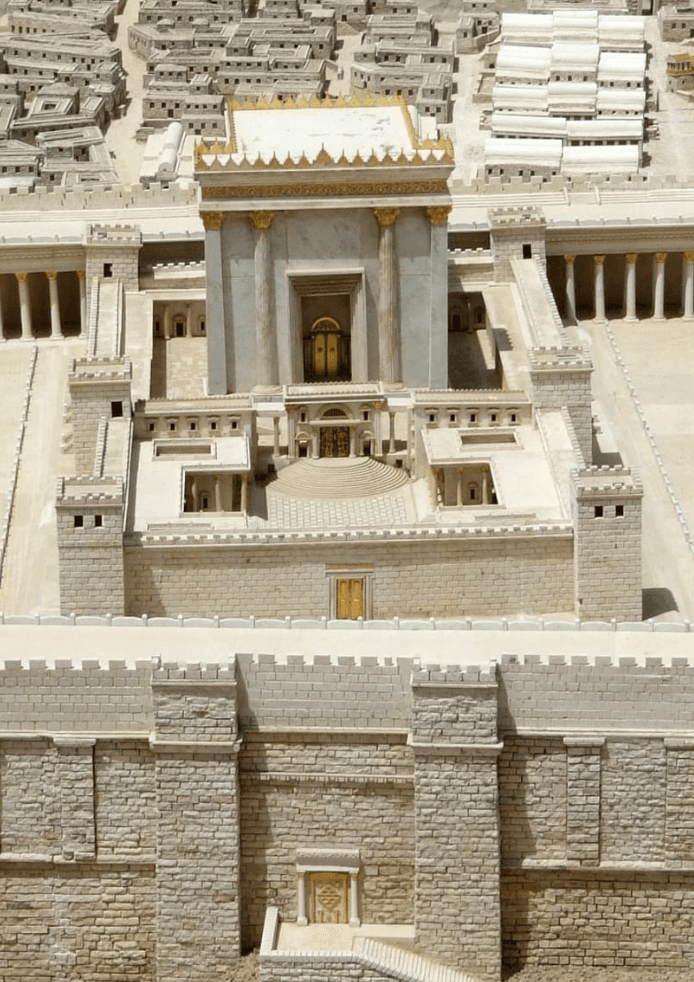
the Rebbe spoke of the extraordinary moment we are living in, a time that calls for unity and preparation for the rebuilding of the Beis HaMikdash and the coming of Moshiach.
Preparation is not only spiritual. At a certain point, it must become practical.
If Moshiach were to come today, would we be ready for the very first mitzvah our nation will once again fulfill together; the Korban Tamid?
That mitzvah requires the Machatzis Hashekel.
This is not symbolic. It is a tangible halachic requirement, something that must already be in hand.
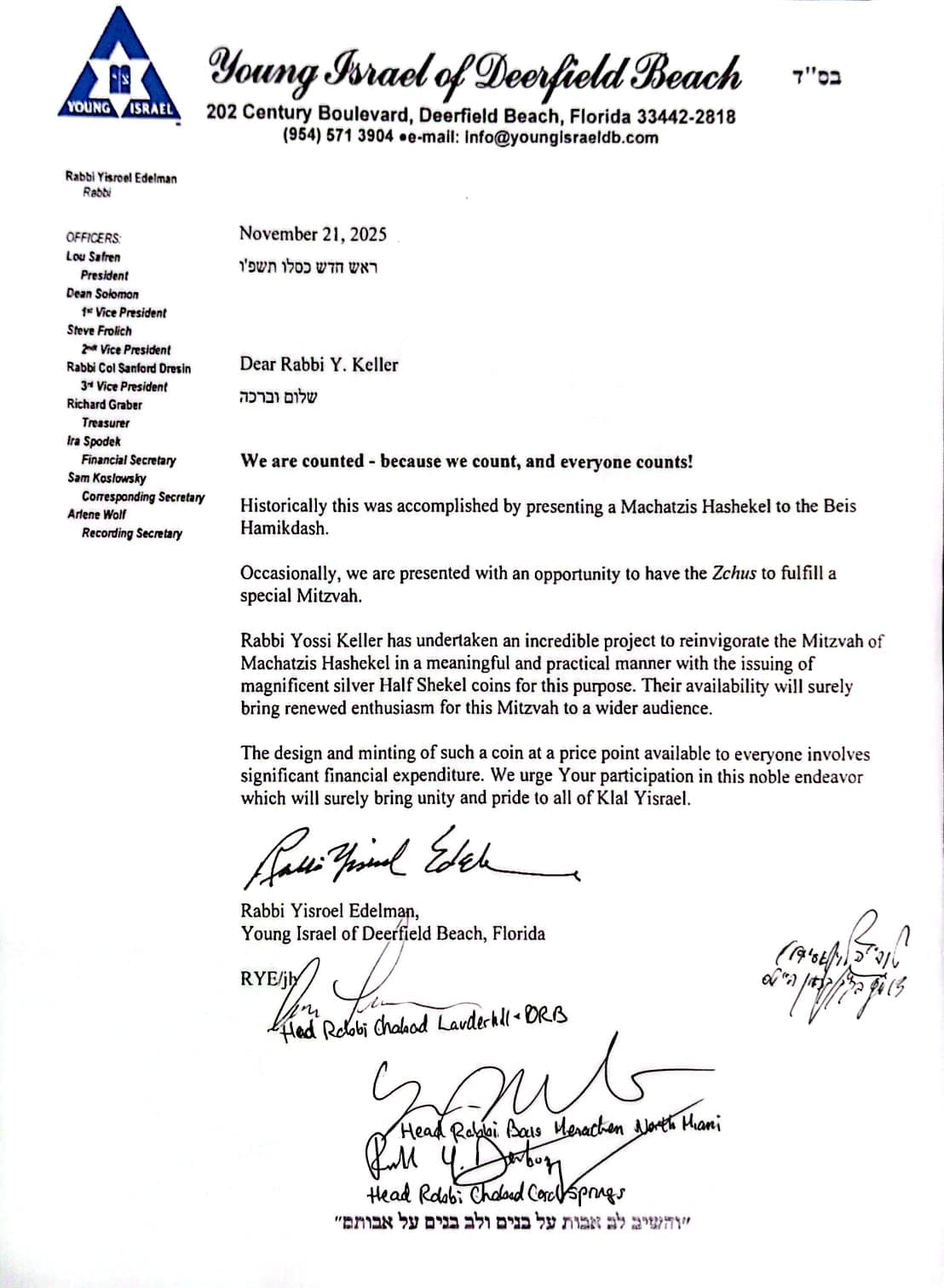
Rabbi Keller received a directive from the Rebbe to prepare himself to rule together with the Beis Din. This project is part of that charge: turning anticipation into readiness.
The Machatzis Hashekel enables each of us to move from hope to action: united, prepared, and ready.

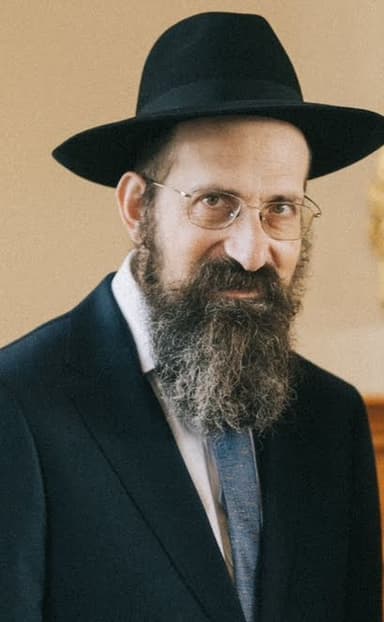
With a profound dedication to Torah and Mitzvos, Rabbi Keller has been a guiding light in the community for decades. His teachings emphasize the importance of preparing for the coming of Moshiach, not just spiritually, but through practical actions that strengthen our connection to the Bais Hamikdash.
This campaign is a direct result of his vision to empower every individual to be ready to fulfill the Mitzvah of Machatzis Hashekel immediately, without delay, when the time comes.
The Rambam writes:
- The Rambam writes that in addition to believing in Moshiach one also needs to anticipate him coming any day: אחכה לו בכל יום שיבוא (see Rambam’s Mishneh Torah, Hilchos Mlochim 11:1).
- One can anticipate Moshiach coming, when he knows what will happen when Moshiach comes:
- The Jews will return to Eretz Yisroel, and rebuild the Bais Hamikdash; and we will bring Korbonos (Rambam ibid).
- On the first day that Moshiach comes, Korbonos Tzibur (=communal sacrifices) will be brought [even if the Bais Hamikdosh is not yet completely rebuilt (see Rambam’s Mishneh Torah, Hilchos Beis Habchiroh 2:4)].
- The communal sacrifices are financed by an annual contribution of a silver Half-Shekel (“Machatzis Hashekel”) by each JewIsh man over the age of 13.
- There is a positive commandment that every Jewish man gives a half-shekel [to the Beis Hamikdash treasury], as stated in the Torah: “..This shall be given by all those included in the census” (Rambam’s Sefer Hamitzvoth, Positive commandment # 171).
- A Jewish man must give the half-shekel all at once [not a portion of it at one time and the remainder in a separate donation] (see Rambam’s Mishneh Torah, Hilchos Shkolim 1:5).
- Therefore, the first Machatzis Hashekel is due on the day Moshiach comes (subsequently, every year at the month of Adar, there is a new collection of Machatzis Hashekel, so the communal sacrifices of the new year (from Rosh Chodesh Nisan onwards) is financed by the new contribution of Machatzish Hashekel (see Rambam’s Mishneh Torah, Hilchos Shkolim 4:11)).
- A Jewish man must give the half-shekel all at once (and not a portion of it at one time, and the remainder in a separate donation to the Beis Hamikdash).
a prerequisite to fulfilling the Mitzvah of "Machatzis Hashekel" is to mint a silver “Machatzis Hashekel” coin that people can contribute to the Beis Hamikdosh once a year.
We pray each day: והשב העבודה לדביר ביתך .. ותחזינה עינינו בשובך לציון ברחמים (restore the service to Your holy Sanctuary.. May our eyes behold Your merciful return to Zion). When Moshiach comes and The Beis Hamikdosh is rebuilt, the Kohanim will bring the communal sacrifices that are financed by every member of Klal Yisroel (obligatory for Men who are thirteen years and older (see Ramban Exodus 30:12; Tosfos Yom Tov Shkolim 1:4); optional for boys under the age of thirteen and for women) contributing a Machatzis Hashekel once a year (which pays: for the Communal offerings).
The mitzvah of the annual contribution of Machatzis Hashekel for the Korbonos Tzibur [described ibid 30:12-13] must be fulfilled by any child who reaches the age of 13 years old (see Ramban Exodus 30:12; Tosfos Yom Tov Shkolim 1:4).